
Tips for Talking with Survivors
Many survivors of sexual violence first seek help from friends, family, and partners before going to specialized support.
When you respond in a supportive way after someone tells you they have experienced sexual violence, you are giving them the care needed to consider other forms of support. You do not need to be an expert to be helpful but learning more can empower you to offer the best response possible!
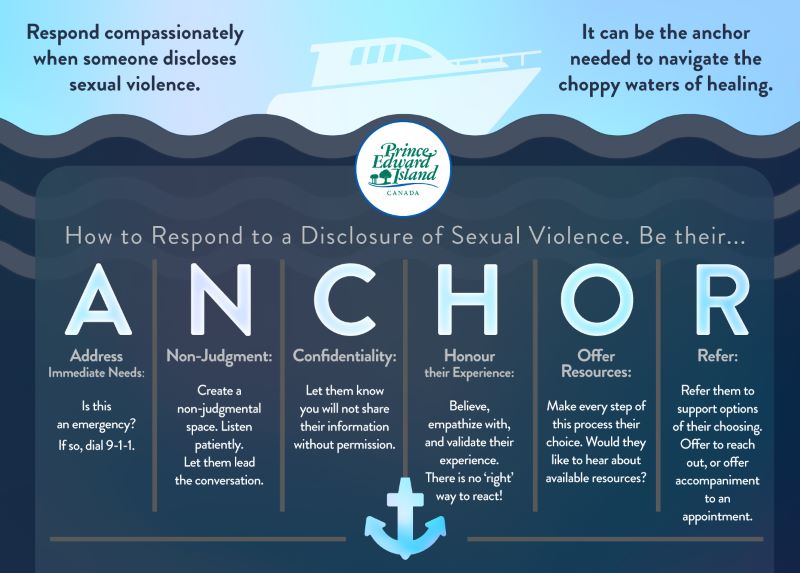
Be their A-N-C-H-O-R!
Address Immediate Needs
Is this an emergency? If so, contact 9-1-1. If not, what are their other immediate needs? (e.g. Medical care, shelter, food, etc.)
Non-Judgment
Create a non-judgmental space where they can express their needs by listening patiently, letting them lead the conversation and avoiding intrusive questioning.
Confidentiality
Let them know that you will keep their information confidential (i.e. not share what has happened to them without their permission). Their information is theirs to share!
Honour their Experience
Believe, empathize and validate their experience. There is no ‘right’ way to react to sexual violence. A validating response has the power to promote healing!
Offer Resources
Restore power lost by making every step of this experience their choice. Ask if they would like to hear about available resources. This might include counselling, Victim Services, reporting options and more!
Refer
Refer them to support options of their choosing. If they need help making the connection, ask them if they would like you to call. Offer to accompany them to an appointment if they wish.